Children and Laptop: Strategic Visual Assets for Modern Digital Communication
In the contemporary digital landscape, visual communication is not merely an aesthetic choice; it is a fundamental component of strategic positioning. When professionals, educators, and business owners seek to convey themes of education, future readiness, or family-oriented technology, the imagery they select must resonate with clarity and professionalism. This is where high-quality digital assets depicting Children and Laptop become indispensable. These are not simple stock photos but carefully crafted vector-based elements designed for versatility, scalability, and brand alignment.
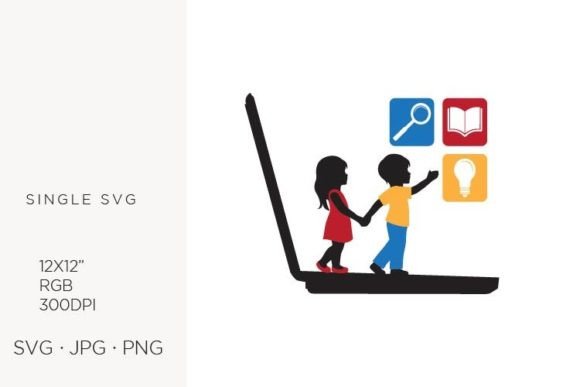
The specific asset profile under discussion involves clipart and vector graphics created with precision in Adobe Illustrator. With an artboard size of 12 x 12 inches, a resolution of 300 DPI, and an RGB color palette, these files are engineered for both digital display and high-quality print output. Available in SVG, JPG, and PNG formats, they offer the flexibility required by modern creators who need to adapt visuals across multiple platforms without losing fidelity. Understanding how to leverage these assets can significantly enhance your branding, educational materials, and marketing communications.
The Strategic Value of Vector-Based Educational Imagery
Why prioritize vector-based graphics over standard photography? The answer lies in control and consistency. Photography captures a specific moment, often constrained by lighting, location, and model availability. In contrast, vector illustrations of Children and Laptop provide a clean, stylized representation that can be seamlessly integrated into diverse design systems. Because these files are made in a vector program like Adobe Illustrator, they remain crisp at any size. Whether you are designing a small icon for a mobile app or a large banner for a conference hall, the integrity of the image remains intact.
This scalability is crucial for maintaining brand consistency. For entrepreneurs and marketers, the ability to use the same visual motif across business cards, websites, social media posts, and printed brochures creates a cohesive brand identity. The RGB color palette ensures that colors appear vibrant on screens, which is essential for web design and digital advertising. Meanwhile, the 300 DPI resolution guarantees that when these images are used for physical products—such as invitations, stationery, or wall art—they retain professional quality without pixelation.
Applications Across Industries and Use Cases
The utility of Children and Laptop graphics extends far beyond simple decoration. These assets serve functional roles in various sectors, supporting goals related to communication, engagement, and operational efficiency.
Education and E-Learning Platforms
For educators and ed-tech developers, visual cues are vital for user experience. Illustrations of children engaging with technology can humanize digital learning environments. You might use these vectors to create intuitive interface icons, module headers, or progress trackers. The clean lines of vector art reduce cognitive load, allowing students to focus on content rather than distracting backgrounds. Furthermore, these images can be adapted for handmade craft items or classroom decorations, bridging the gap between digital instruction and physical learning spaces.
Marketing and Brand Positioning
Small business owners and marketers often struggle to find imagery that accurately reflects their target demographic without appearing generic. Customizable vector graphics allow for subtle adjustments in color and composition to match brand guidelines. If your brand focuses on family-friendly tech solutions, using stylized depictions of Children and Laptop can convey trust and approachability. These assets are ideal for creating announcements, party decor for tech-themed events, or promotional materials for coding camps and STEM workshops.
Creative Projects and Personalization
Hobbyists and freelance designers can leverage these files to create unique products. The SVG format is particularly valuable for cutting machines used in crafting jewelry, paper items, or handmade cards. By importing the vector paths into design software, creators can produce intricate cut-outs or layered designs that would be impossible with raster images alone. This opens up revenue streams for those selling printed paper items, custom invitations, or personalized stationery on platforms like Etsy or Shopify.
Technical Considerations for Optimal Results
To maximize the value of these digital graphics, it is essential to understand the technical specifications and choose the right file format for each task. Misusing file types can lead to poor performance, slow loading times, or degraded visual quality.
- SVG (Scalable Vector Graphics): Best for web design, logos, and interactive elements. SVGs are code-based, meaning they load quickly and can be styled with CSS. Use this format when you need the image to scale dynamically across different screen sizes without losing sharpness.
- PNG (Portable Network Graphics): Ideal for digital presentations, social media graphics, and overlays. PNGs support transparency, allowing you to place the Children and Laptop illustration over colored backgrounds or photographs without a white box around it. Ensure you use the 300 DPI version for high-resolution displays.
- JPG (Joint Photographic Experts Group): Suitable for email newsletters, printed flyers, and scenarios where file size is a concern and transparency is not needed. While JPGs do not support transparency, they are widely compatible and efficient for static images.
When working with the 12 x 12 inch artboard size, remember that this square aspect ratio is versatile. It works well for social media posts (Instagram, Facebook), profile pictures, and product thumbnails. However, for wide banners or horizontal headers, you may need to crop or extend the background elements within your design software. Always maintain the original vector file as a master copy to ensure you can re-export in any dimension as needed.
Strategic Planning and Risk Mitigation
While high-quality assets provide a strong foundation, their effectiveness depends on intentional application. Using Children and Laptop graphics without a clear strategic goal can lead to mixed messaging or visual clutter. Before integrating these elements into your projects, consider the following decision-making framework:
- Define the Objective: Are you aiming to inspire, inform, or sell? If the goal is to promote safety in online learning, choose compositions that show supervised interaction. If the goal is to highlight creativity, select images where the child appears engaged in design or coding.
- Audience Alignment: Ensure the style of the vector art matches the expectations of your audience. A corporate B2B report may require more minimalist, abstract representations, while a children’s book publisher might prefer colorful, detailed illustrations. The versatility of Adobe Illustrator files allows for color adjustments to suit these tonal shifts.
- Contextual Relevance: Avoid using these images purely for decoration. Every visual element should support the narrative. For instance, if you are discussing the risks of screen time, an image of a child happily using a laptop might send the wrong signal unless paired with appropriate text or contrasting visuals.
Risks of random usage include brand dilution and audience confusion. If your visual language is inconsistent—mixing hyper-realistic photos with flat vectors without a unifying theme—it can undermine perceived professionalism. Therefore, treat these vector assets as part of a broader design system. Establish guidelines for how and when to use them, ensuring they complement your typography, color scheme, and overall message.
Enhancing Productivity and Workflow
For freelancers and agencies, time is a critical resource. Starting from scratch for every project is inefficient. Having a library of pre-made, high-quality vectors like Children and Laptop accelerates the design process. Instead of spending hours sketching or sourcing expensive custom illustrations, you can import these ready-to-use elements and customize them to fit the specific brief. This efficiency allows you to focus on higher-level strategic tasks, such as client communication, campaign planning, and outcome analysis.
Moreover, these files facilitate collaboration. When working with teams, standardized assets ensure that everyone is on the same page visually. Designers, developers, and marketers can all access the same SVG or PNG files, reducing errors and revision cycles. This operational smoothness contributes to better long-term results and client satisfaction.
Long-Term Value and Adaptability
Investing in versatile digital graphics yields compounding returns. As your business or creative practice evolves, these assets can be repurposed for new initiatives. A vector used today for a school newsletter can be adapted tomorrow for a tech startup’s landing page or a community workshop flyer. The durability of vector formats means you will not need to replace these assets as technology advances or screen resolutions increase.
In conclusion, the thoughtful integration of Children and Laptop vector graphics into your workflow supports clearer communication, stronger branding, and more efficient operations. By understanding the technical specifications, aligning usage with strategic goals, and maintaining consistency, you can transform simple digital elements into powerful tools for achieving professional outcomes. Whether you are designing web interfaces, printing handmade cards, or crafting educational materials, these assets provide the flexibility and quality needed to stand out in a crowded digital marketplace.